
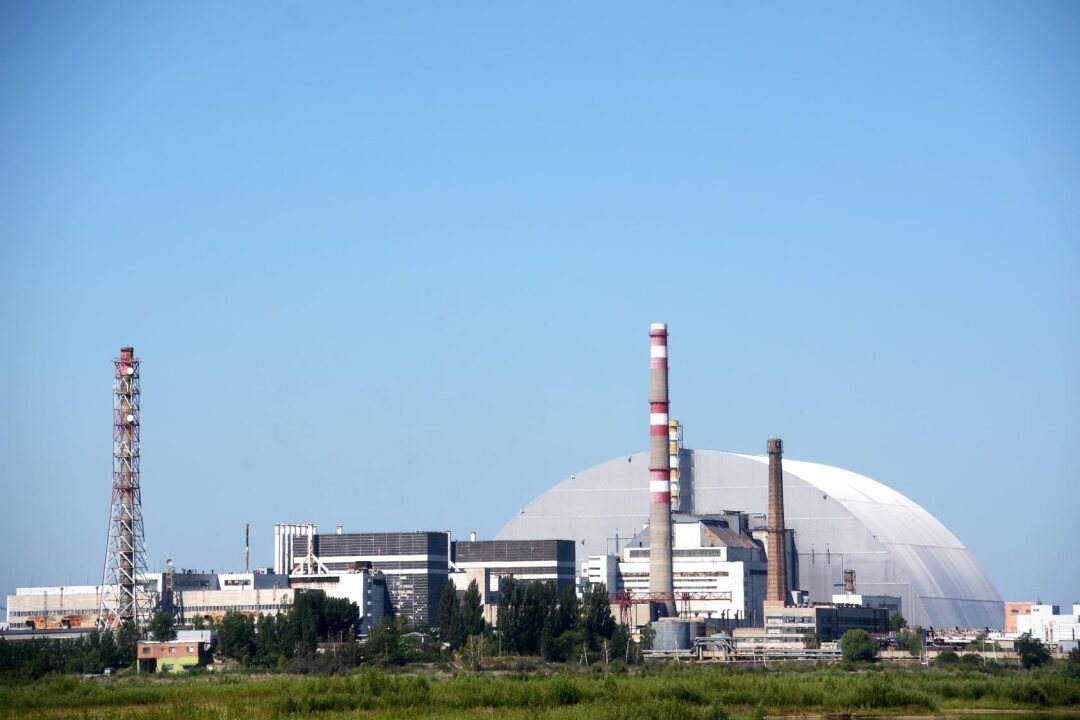
In its report published on the occasion of the 40th anniversary of the Chornobyl Nuclear Power Plant (NPP) disaster, Greenpeace of Ukraine has emphasized the urgent need to address damages to the New Safe Confinement (NSC) erected over the fourth reactor unit. These damages resulted from a strike by a Russian drone in 2025. The incident is regarded as an attack on a critical nuclear facility, causing harm to protective structures designed to isolate the reactor’s remains and the sarcophagus.
Currently, dismantling of the sarcophagus is critically necessary; however, due to the NSC’s compromised integrity, this operation is presently unfeasible. The report underscores that without immediate metal-encasement repairs, risks of a collapse would grow, posing long-term nuclear safety issues even without alterations in radiological conditions.
According to the IAEA, urgent repair works completed on October 3, 2025, included installing temporary coverage over a 15-square-meter opening, mitigating moisture ingress. However, the NSC’s isolative function was not restored, raising the likelihood of radioactive material leakage if structural failure occurs.
In March 2026, the Director of the Chornobyl NPP stated that comprehensive restoration—including the replacement of damaged membranes, repairs to the primary crane system and steel support structures, and sealing of the outer external cladding—constitutes a complex engineering challenge, particularly given the high radiation levels. Completion of these activities is projected by 2030.
The dismantling of unstable structures is tentatively divided into early and delayed stages, both requiring extended durations estimated at multiple decades. Analyses indicate that dismantling must be complete by 2035, contingent upon the initiation of reconstruction efforts.
Regarding the management of Fuel-Containing Material Waste (FCMW), the task is complicated by Ukraine’s lack of a deep geological repository. Presently, Finland operates the only such repository worldwide. Temporary storage of FCMW could potentially be arranged on the NSC’s concrete platform.
Ukraine’s Ministry of Finance estimates that the full restoration of the NSC following the Russian drone strike will exceed €100 million. The Guardian approximated total expenses at tens of millions of dollars, likely involving international financial support.
The drone strike on February 14, 2025, caused significant damage to the sarcophagus, increasing the risk of radioactive dust release and atmospheric moisture ingress that exacerbates corrosion processes. American engineer Eric Schmiman, involved in the sarcophagus design, emphasized the need for refurbishment to ensure long-term safety.
The Ukrainian government has dedicated over 1.5 billion UAH to maintaining the Chornobyl NPP in a safe state, demonstrating awareness of nuclear safety challenges and the imperative to respond promptly to incidents.


