
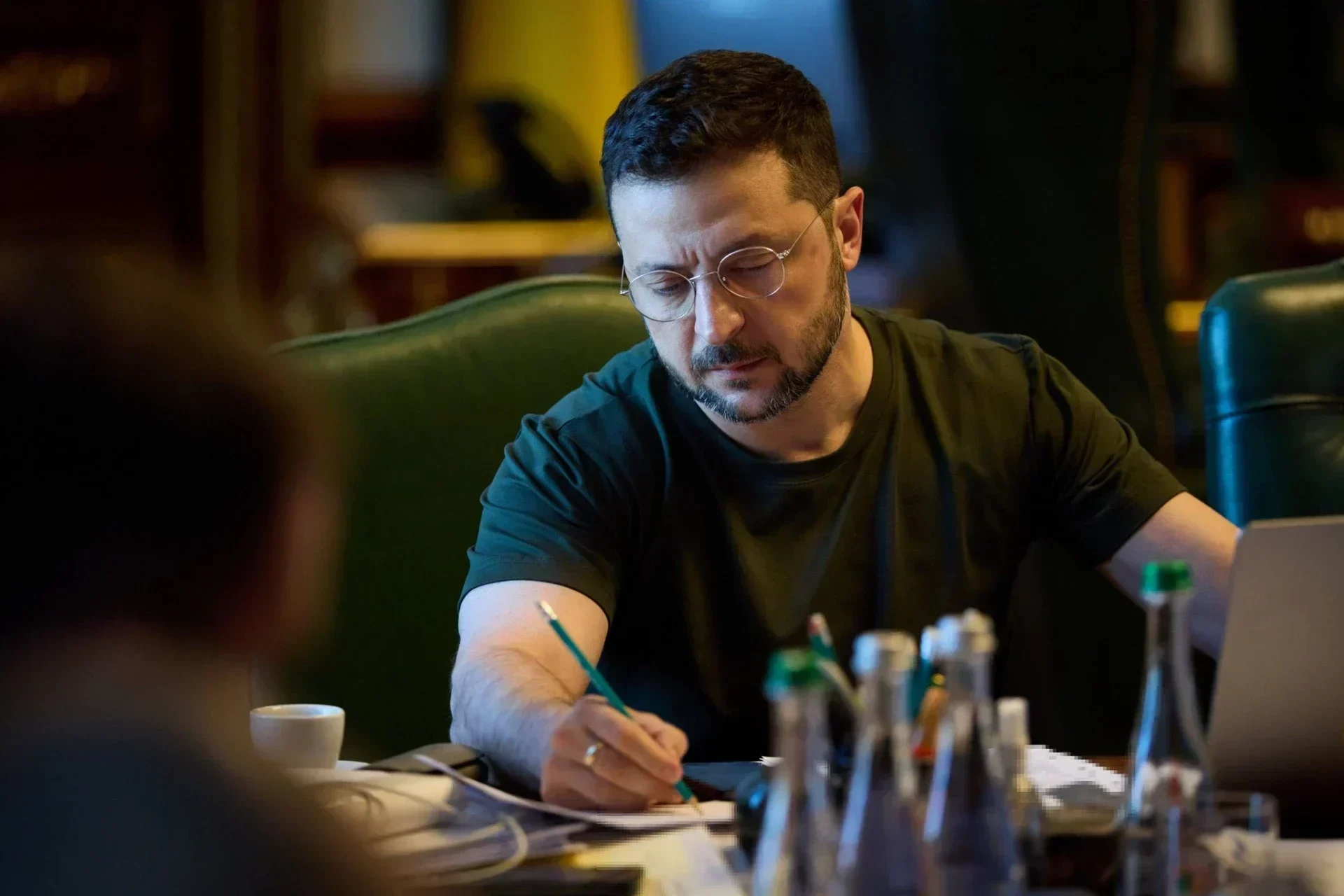
On June 4, Ukrainian President Volodymyr Zelenskyy publicly released an open letter to the President of the Russian Federation, Vladimir Putin, expressing his willingness to engage in peace talks to cease hostilities and end the armed conflict. In the address, he remarked that over President Putin’s more than 26 years in office, relations between the two nations have shifted from economic collaboration to a full-scale war, which Zelenskyy described as a “personal decision” by the Russian leader.
President Zelenskyy highlighted the increasing impact of the war on Russian society, specifically citing economic strains, fuel shortages, mobilization efforts, and battlefield losses, emphasizing that Russia’s military suffers over 30,000 casualties monthly. He pointed out that 63% of these casualties are fatalities — a significantly high ratio for any modern army — and predicted this trend to persist.
At the same time, he stressed Ukraine’s unwillingness to endure a prolonged war and its determination to end it with guaranteed security measures. The President expressed Ukraine’s readiness to agree to a ceasefire during peace talks and proposed a prisoner exchange following an “all-for-all” formula. Zelenskyy thus appealed to Russia to end the conflict honorably and with guarantees to prevent its recurrence.
Neutral nations — such as Switzerland, Turkey, and Arab-world countries — were suggested as venues for the negotiations. Furthermore, Kyiv proposed involving the United States and European nations as potential security guarantors, using the established front lines as a starting point for further discussions.
Zelenskyy emphasized the need to set a specific date for the negotiations and rejected any prior agreements reached in Ukraine’s absence, including those made at the Anchorage summit. Should Russia refuse to end hostilities, the Ukrainian President affirmed his continued commitment to defending the nation’s sovereignty.
The letter also analyzed the current state of Russian society, the military situation, the impacts of sanctions, and the international community’s support for Ukraine, while proposing key aspects for future negotiations and measures to ensure regional stability.


