
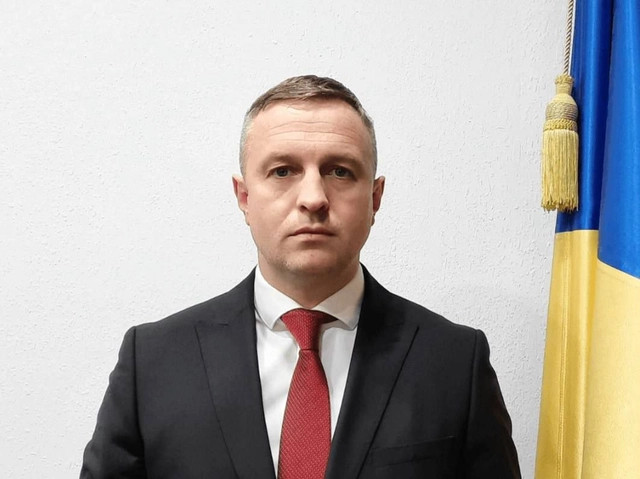
Ukrainian President Volodymyr Zelensky has appointed Anton Kovalsky as the acting prosecutor general, a decision made on September 17, 2026, shortly after the parliament sanctioned the dismissal of Ruslan Kravchenko amid a significant corruption scandal.
With presidential decree No. 946/2026, Zelensky directed Kovalsky to take on the temporary leadership of the Prosecutor General’s Office, a role that has become increasingly contentious due to recent allegations of corruption and conflict with anti-corruption agencies.
The appointment follows a decisive vote in parliament where 317 lawmakers supported Kravchenko’s removal, allowing Zelensky to formally dismiss him from office. Kovalsky, who is 42 years old, previously served as the head of the Khmelnytskyi Regional Prosecutor’s Office and now steps into a position that has been marred by allegations of misconduct and a fraught relationship with Ukraine’s independent anti-corruption institutions.
Background on Anton Kovalsky
Kovalsky was born on May 12, 1984, in Vinnytsia. He graduated from the National Academy of the Prosecutor’s Office of Ukraine in 2011 and began his career in the prosecution service that same year. His previous roles include deputy head of the Vinnytsia Regional Prosecutor’s Office and head of the Chernivtsi Regional Prosecutor’s Office, which he led until mid-2025.
His recent appointment comes after media speculation identified him as a leading candidate to succeed Kravchenko, alongside Dnipropetrovsk regional prosecutor Valerii Prykhozhanov.
Corruption Allegations and Investigations
The turmoil within the Prosecutor General’s Office escalated on September 4, when the National Anti-Corruption Bureau of Ukraine (NABU) and the Specialized Anti-Corruption Prosecutor’s Office (SAPO) launched Operation Carthage. This operation unveiled an alleged criminal organization within the office that was purportedly protecting fraudulent call centers.
Investigators claimed that a senior official facilitated the operation of these centers in exchange for bribes, allowing them to evade prosecution and launder their earnings. Reports suggest that some call centers paid around $7,000 monthly for protection, employing tens of thousands of individuals across Ukraine.
In response to the allegations, NABU conducted raids on the Prosecutor General’s Office, detaining a senior official linked to the scheme and seizing substantial amounts of cash.
Kravchenko has denied any wrongdoing, asserting that he never authorized the protection of illegal operations and that the implicated employee had been suspended pending an internal review.
Political Fallout and Kravchenko’s Resignation
Following a series of meetings with Kravchenko and the heads of NABU and SAPO, Zelensky urged for decisive action on September 7. Kravchenko subsequently submitted his resignation, describing it as a political decision to prevent the Prosecutor General’s Office from becoming embroiled in political disputes.
However, he remained in office until parliament officially authorized his dismissal. The situation intensified when Kravchenko accused NABU’s director of misconduct, further complicating the already strained relations between the prosecutor’s office and anti-corruption agencies.
On September 14, Zelensky suspended Kravchenko under martial law provisions and sought parliamentary approval for his dismissal, which was granted two days later. Kovalsky’s appointment now places him at the helm of an institution under scrutiny for its handling of corruption investigations and its interactions with independent anti-corruption bodies.
The developments in Ukraine’s anti-corruption efforts are closely monitored by the European Union and international stakeholders, as they are critical to the country’s aspirations for EU membership and ongoing financial support.


