
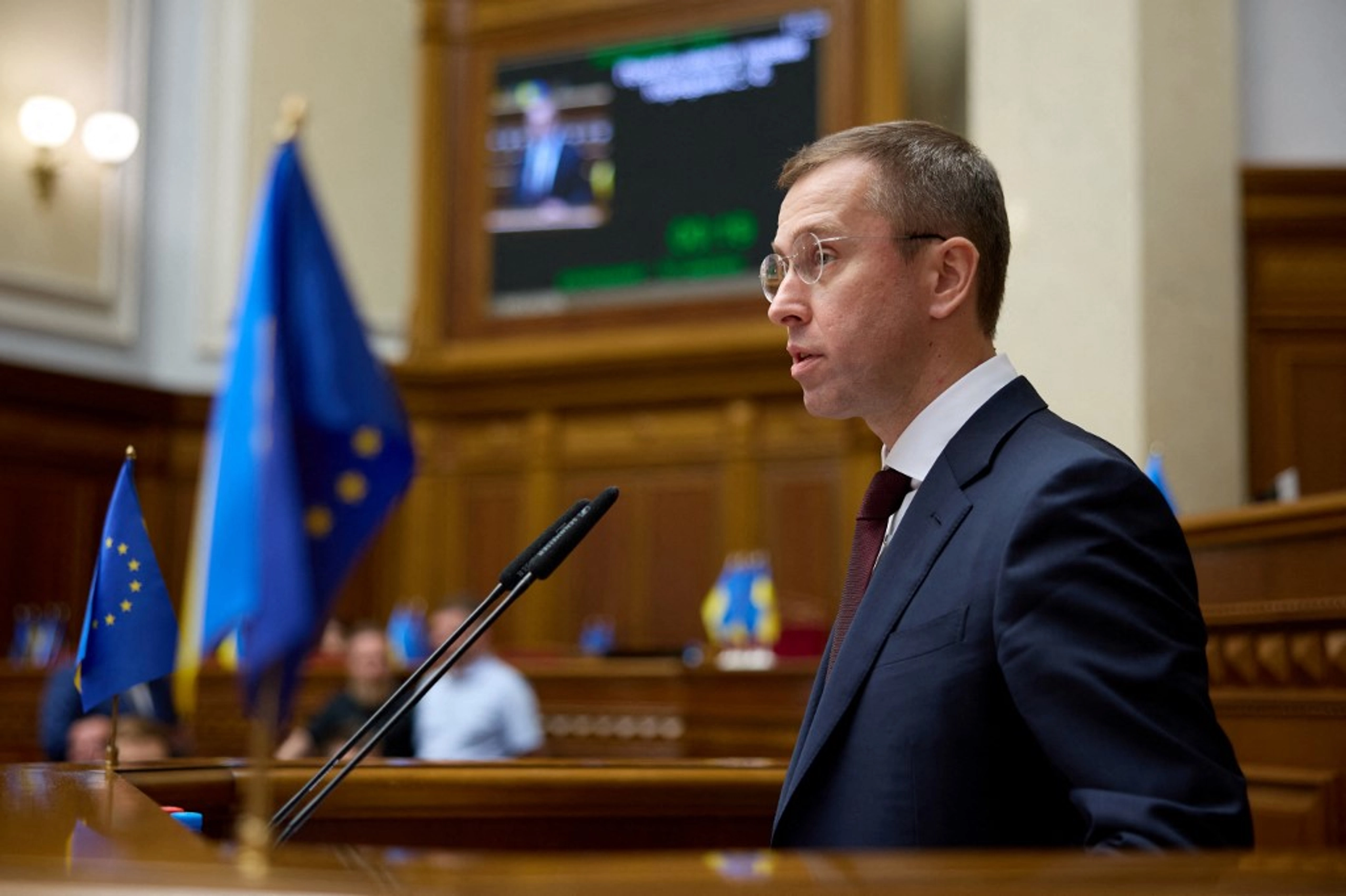
Ukraine’s parliament, the Verkhovna Rada, has decisively rejected eight bills aimed at ending the VAT exemption on low-value imported parcels. This decision, made on September 1, also included a failure to approve a vote for selecting six new members of the Accounting Chamber, both of which are critical for securing EU and IMF financing.
The parliamentary votes occurred just hours after Prime Minister Serhii Koretskyi urged lawmakers to pass reforms tied to an anticipated $30 billion in international support for 2026.
Koretskyi Highlights $27 Billion Defense Financing Gap
In his address, Koretskyi revealed that a recent government audit indicated Ukraine requires $30 billion from international partners in 2026 to meet its commitments. He also warned of a $27 billion shortfall in defense financing, which Ukraine is urgently seeking to cover with the help of its allies. The Prime Minister attributed this gap to escalating war costs and the early expenditure of part of the Defense Ministry’s budget for the second half of 2026.
“Without addressing these issues, the state could face significant financial risks, impacting defense capabilities, social services, and wage payments,” Koretskyi stated, as reported by Interfax-Ukraine.
He emphasized the need for the government to adopt 44 decisions by November 1, noting that of the 26 bills pending in parliament, only 12 were on the agenda, while the government had yet to submit 17 promised bills.
Parliament’s Rejection of Parcel Tax Bills
This marks the second time this year that lawmakers have blocked related tax reforms. The first attempt involved customs bill No. 15460, which failed to secure the necessary 226 votes, garnering only 194. Subsequently, the core bill, No. 15112-d, and six alternative versions aimed at ending the VAT exemption also fell short with 210 votes.
Speaker Ruslan Stefanchuk expressed disappointment following the vote, stating, “Dear colleagues, I’m sorry.”
MP Yaroslav Zheleznyak from the Holos party noted that the proposed reforms would not take effect until 2027, and the necessary technical systems for enforcement had not been developed, with no budget allocated for this purpose.
The Finance Ministry had projected that the reform could generate approximately Hr. 10 billion ($224.6 million) annually for the state budget. Its passage was a prerequisite for Ukraine’s third IMF tranche of around $0.7 billion and the second tranche of the EU’s €90 billion ($102 billion) support loan. The deadline for this reform had already been extended from March to July, and this latest failure marks a significant setback.
Impact on EU Support Loan
On the same day, lawmakers also failed to approve the formation of an advisory group to vet candidates for six vacant positions on the Accounting Chamber’s supervisory board. This nomination was a condition for the €3.7 billion ($4.2 billion) second tranche of the EU’s Ukraine Support Loan, which was due by August 2026, a deadline that has now passed.


