
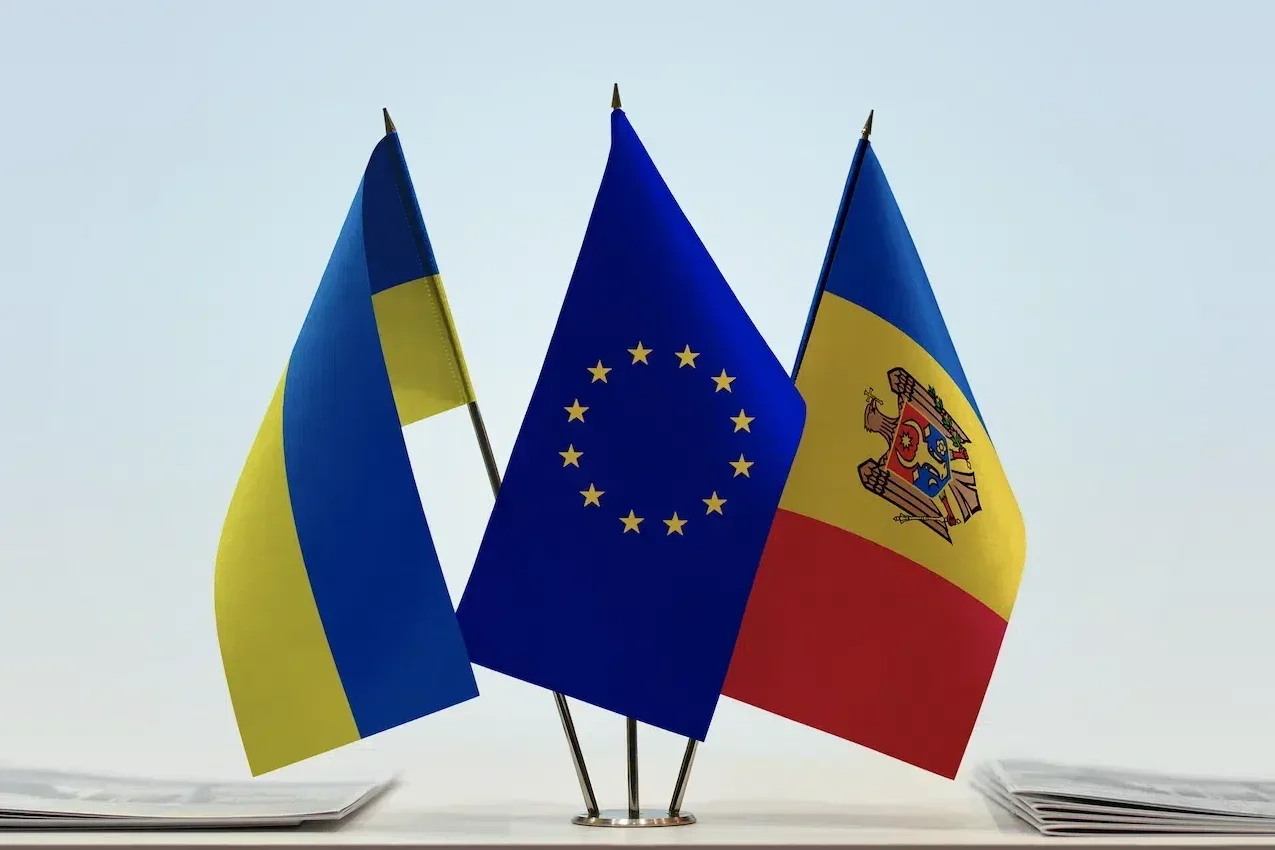
On June 15, Ukraine and Moldova formally launched the practical phase of their EU membership negotiation process. The initial negotiation cluster, focused on laying the foundations of a functioning democratic state, was launched in Luxembourg. This cluster addresses the rule of law, judicial independence, the operations of government institutions, and anti-corruption measures. Progress in these areas will determine the sequence of discussion of subsequent topics, including integration into the single market, environmental policies, the economy, and social standards.
Ukraine and Moldova submitted their EU membership applications in 2022, following the start of Russia’s full-scale war, and subsequently attained candidate status. The European Union made the political decision to commence negotiations in June 2024. However, Hungary’s stance delayed substantive proceedings until the formation of its new government in April 2026, when all EU members unanimously supported opening the first negotiation cluster for both countries. European Commission President Ursula von der Leyen and European Council President António Costa highlighted the reform efforts of Ukraine and Moldova, acknowledging the challenging wartime circumstances. In a joint statement, they affirmed that EU expansion remains a strategic priority.
Ukrainian President Volodymyr Zelenskyy described the opening of the first cluster as a significant political and moral signal of support. It is worth noting that starting negotiations does not guarantee swift membership. Ukraine must adapt its legislation to comply with over a thousand EU norms and ensure their effective implementation, with unanimous approval from all EU member states required.
Heather Grabbe, an analyst at Bruegel, emphasized that this process will demand considerable administrative resources and time. She also advocated for Ukraine’s integration into the EU’s common security and defense policies, given its combat experience and current capabilities. European institutions commend Ukraine’s reform efforts but anticipate expedited completion of key objectives. Approximately 15% of the ten-point action plan approved in December 2025 has been executed. Critical measures include enhancing the independence of the NABU and SAP, adopting an anti-corruption strategy, and reforming judicial and prosecutorial appointment procedures. With appropriate political will, the technical segment of negotiations could be concluded within approximately four years; however, the ultimate decision on accession would remain political.
On June 15, initial intergovernmental conferences with Ukraine and Moldova officially opened “Cluster 1: Basics” of the negotiation process. Estonian President Alar Karis, during a joint press conference with Volodymyr Zelenskyy in Tallinn, expressed support for accelerating Ukraine’s EU integration and initiating all negotiation clusters by summer 2026.


