
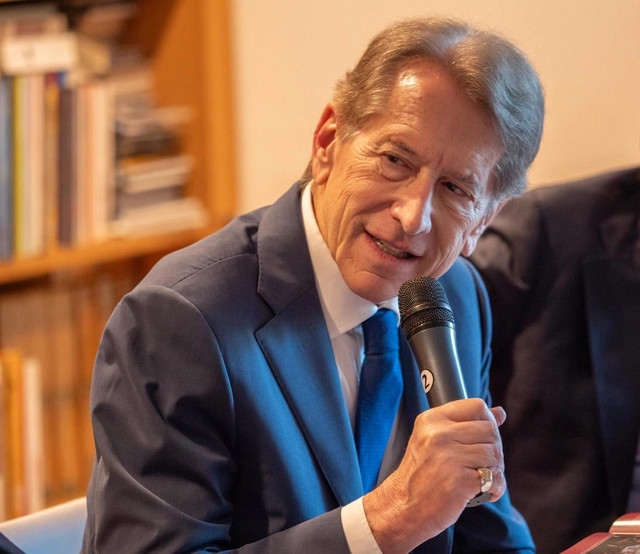
Giulio Terzi di Sant’Agata, Italy’s former foreign minister and current chair of the Senate’s Committee on European Union Policies, has reaffirmed Italy’s unwavering support for Ukraine amidst the ongoing conflict. In a recent discussion, Terzi highlighted Italy’s commitment to Ukraine’s aspirations for EU membership, European defense, and accountability for Russian aggression.
Since the onset of Russia’s military aggression on February 24, 2022, Terzi noted that Italy has emerged as a strong advocate for Ukraine, consistently voicing support for its sovereignty and territorial integrity at various international summits, including G7, NATO, and European Council meetings. Italy has actively endorsed all sanctions against Russia and has played a pivotal role in fostering unity among EU and NATO member states.
Italy’s Role in European Security
Terzi emphasized that Italy aims to cultivate a robust culture of security and defense across Europe. He stated, “It is time for Europe to guarantee its own security,” echoing sentiments expressed by Prime Minister Giorgia Meloni at the latest NATO summit. The summit underscored the necessity for Europe to enhance its military capabilities and operational readiness, positioning itself as a credible security actor within NATO.
As the conflict continues, Terzi believes that Ukraine is an integral part of the European defense framework, despite the legal and political conditions for its membership still being in development. He pointed out that the EU must evolve into a stronger security entity, capable of complementing NATO’s efforts without causing duplication or tension.
Ukraine’s Path to EU Membership
Ukraine’s determination to join the European Union is rooted in a long-standing commitment to European values, dating back to its refusal to join the Moscow-led Commonwealth of Independent States. Terzi noted that the European Council’s recent acknowledgment of Ukraine’s accession process reflects its genuine ambition to integrate into the European family.
He highlighted the significant reforms Ukraine has undertaken, particularly in the judiciary and anti-corruption sectors, which demonstrate its commitment to aligning with European standards. The ongoing efforts to digitalize administrative processes and strengthen anti-corruption measures are crucial steps toward EU integration.
Reconstruction and Future Cooperation
Looking ahead, Terzi discussed Italy’s role in Ukraine’s reconstruction, which has been a priority during Italy’s G7 presidency. He emphasized the importance of rebuilding infrastructure, schools, and healthcare facilities to ensure Ukraine’s revival and security. Italy’s commitment to supporting Ukraine’s recovery is evident through various initiatives, including its leading role in the reconstruction of Odesa Cathedral.
As the conflict evolves, Terzi stressed the need for a robust partnership between Italy and Ukraine, particularly in defense and technological cooperation. He noted that Italy’s defense industry, alongside Ukraine’s operational capabilities, presents significant opportunities for collaboration in countering hybrid threats and enhancing regional security.
In conclusion, Terzi called for a clear understanding of what genuine security entails for Ukraine, emphasizing that any reconstruction efforts must be accompanied by a commitment to uphold Ukraine’s sovereignty and territorial integrity. He reiterated the necessity for accountability regarding war crimes and the importance of establishing a special tribunal to address the aggression against Ukraine.


