
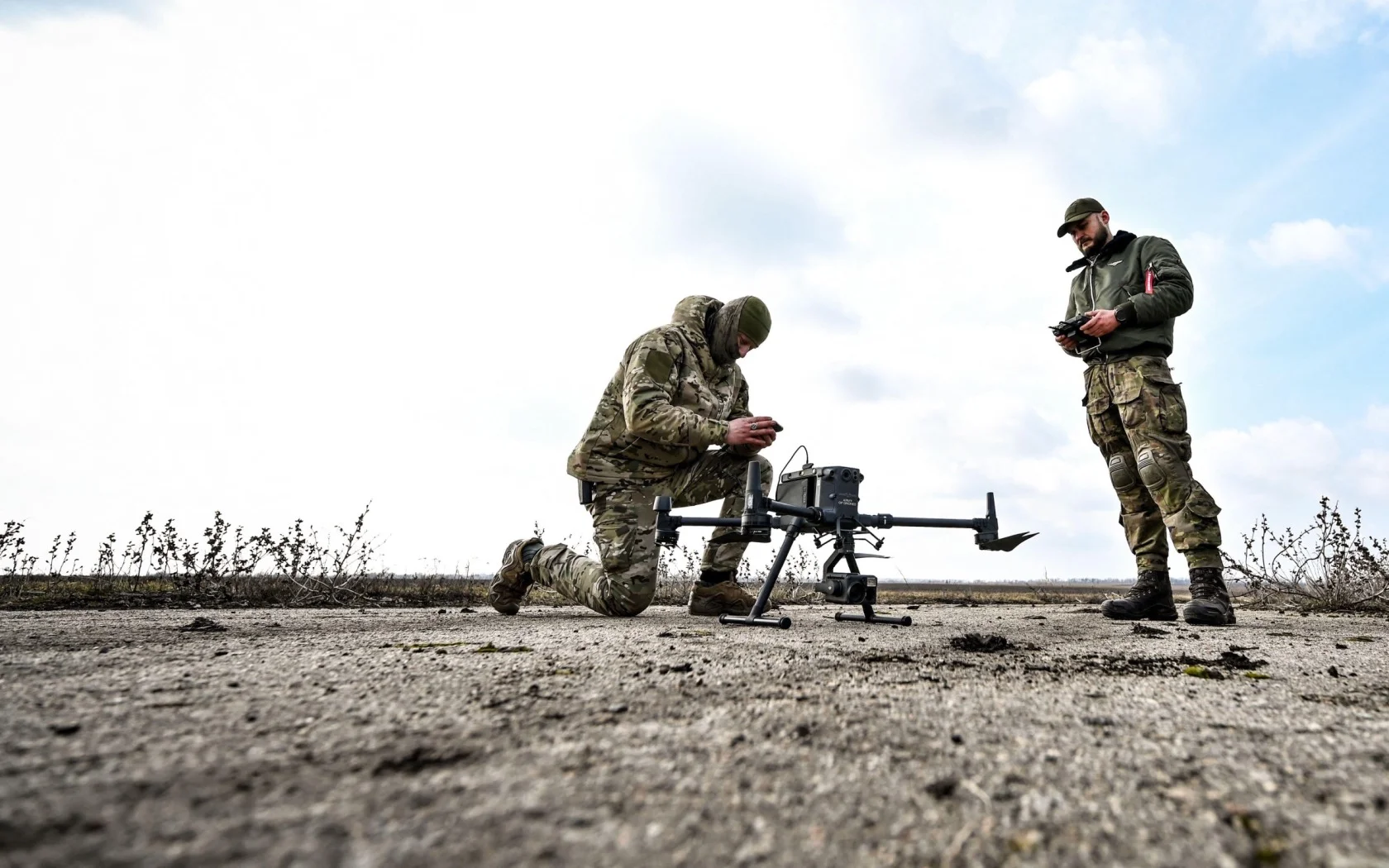
Former New Zealand Defense Minister Ron Mark has called for the country to invite Ukrainian military specialists to train its armed forces in drone operations, emphasizing the need to learn from Ukraine’s battlefield innovations. Mark, who is on his sixth visit to Ukraine since the onset of the full-scale invasion in 2022, argues that closer military and technological cooperation aligns with Wellington’s national security interests.
Mark stated that the New Zealand Defence Force (NZDF) has much to gain from Ukraine’s rapid advancements in military technology. He highlighted that formal collaboration with Kyiv could enhance New Zealand’s strategic capabilities, particularly in drone warfare.
Advocating for Tactical Training
“When Russia launched its full-scale war, New Zealand sent its soldiers halfway around the world to help train Ukrainians,” Mark noted. “Today, it is time to flip the script and bring Ukrainian training advisors to upskill our forces in the art of drone warfare.”
Mark, who served as defense minister from 2017 to 2020, has been delivering humanitarian aid and advocating for Ukraine as a private citizen during his visits. His observations of combat operations across Ukraine have underscored the transformative impact of unmanned systems on military strategies.
Transforming Military Dynamics
Mark pointed out that the early stages of the conflict were marked by traditional trench warfare, reminiscent of World War I. However, the rapid deployment of loitering munitions, first-person view (FPV) drones, and automated reconnaissance systems has fundamentally altered operational dynamics on the battlefield.
He emphasized that Ukraine’s successes extend beyond land operations, noting how the Armed Forces of Ukraine have effectively neutralized elements of Russia’s Black Sea Fleet using uncrewed surface vessels (USVs) and long-range missiles, despite lacking a conventional naval fleet.
Mark raised questions about the prioritization of conventional military assets in Western defense strategies, suggesting that lower-cost autonomous systems have proven their strategic value. “We’re talking about replacing our frigates, but why do that when Ukraine has shown that the Black Sea Fleet can be neutralized without a conventional navy?” he asked.
Diplomatic Tensions and Espionage Allegations
Mark’s push for enhanced defense cooperation comes amid rising diplomatic tensions between New Zealand and Russia. In late July, New Zealand’s Security Intelligence Service (NZSIS) refuted claims from Russia’s Federal Security Service (FSB) that Wellington had recruited a spy within the Russian Federation.
The FSB alleged that a Russian citizen had contacted the NZSIS and shared sensitive information, but the NZSIS maintained its policy of not commenting on operational matters, emphasizing that Russian state media should not be considered a reliable source.
Prime Minister Christopher Luxon also refrained from commenting, adhering to conventions regarding intelligence matters. Analysts noted that New Zealand, a member of the Five Eyes intelligence alliance, has imposed extensive sanctions on Russia, suggesting that the espionage allegations may be an attempt to undermine New Zealand’s diplomatic stance in support of Ukraine.


